Metal and Masonry
A handrail is the one thing every visitor touches.
Baluster systems, cable railings, glass, wall-mounted handrails, wooden and wrought iron, with non-slip grips where they are wanted.
A handrail is the one part of a building every visitor puts a hand on
Which is why the fit matters more than the catalogue picture. Baluster and handrail systems carry support on both sides. Cable railings stay sleek and keep the view. Glass handrails do the same in a more contemporary register. Wall-mounted handrails save space on a narrow stair and give support along one side. Wooden rails read warm and take a finish that matches the interior. Wrought iron is the durable, customisable option and the one this shop is named for.
Safety, code and the things people only notice when they are wrong
Improved safety for everyone using the stair, compliance with building codes, better property value, and real support for elderly or disabled users. Non-slip grips are available, and so is cleaning and inspection afterwards.
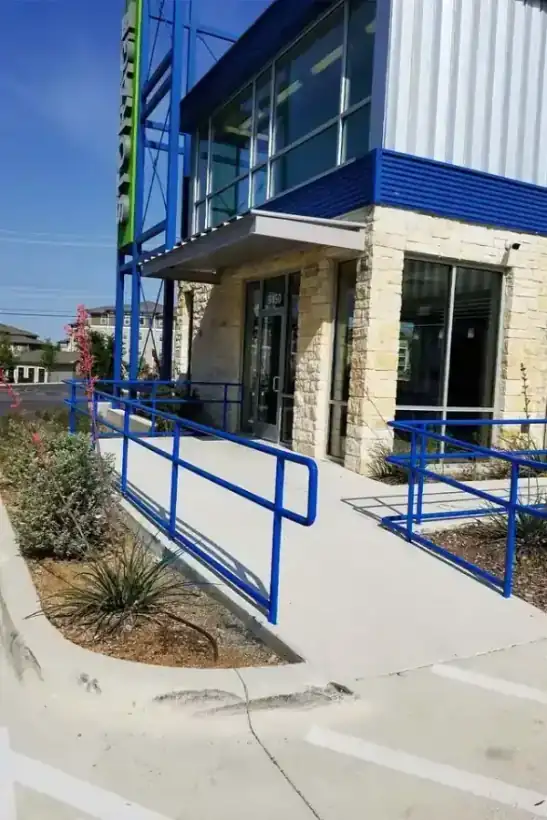
The rail in the photograph is ours: steel pipe, fabricated and installed on a commercial ramp.
Six systems, and none of them is the default one
We build baluster and handrail systems with support on both sides of a stair, in whatever style fits the property. Cable railings run sleek and modern with minimal visual obstruction, which is why they show up on porches and decks where the client wants to keep the view. Glass handrails do the same job from the other direction, trading the cable's thin lines for a fully unobstructed panel. Wall-mounted rail supports a narrow staircase along one side only, which saves space on a tight interior run. Wooden rail brings warmth and can be finished to match existing interior decor, and wrought iron still does what it has always done: durable, customizable, and either classic or ornamental depending on how far the client wants to take the scrollwork.
The reasons people call for a handrail in the first place are consistent across all six systems: safety, aesthetic appeal, staying inside building code, support for an elderly or disabled member of the household, and, for a lot of sellers, real added property value on a stair that used to be bare. Non-slip grips are available on any of the six for a household where that matters more than the finish. We also clean and inspect installed rail on request, since a loose baluster is a cheap fix if it is caught early and an expensive one if it is not.
A ramp rail has to answer to code, not to taste
Commercial and accessibility rail is its own category of this work. An ADA ramp rail has requirements a residential stair rail does not, and we design to meet them rather than treating code compliance as a detail to check later. The pipe handrail below runs alongside a stone-and-metal commercial building, following the ramp's full rise in one continuous line, welded rather than bolted at the joints so there is nothing for a hand to catch on.
A lot of handrail jobs start life as a fabrication conversation, especially when the stair itself is unusual, and a handrail on an elevated deck or landing often needs a matching guardrail run to close the rest of the opening.