Metal and Masonry
Metal Beam Guardrails
Aluminum, stainless steel or steel, sized to the drop it is protecting and the traffic that will lean on it.
A guardrail is sized to the drop, not the other way around
Every guardrail job starts with the same six design factors: aesthetics, height, load capacity, spacing, strength and visibility, and they do not all pull in the same direction. A rail tall enough to stop a forklift on an industrial loading dock reads differently than one meant to keep a toddler off a residential deck edge, and the spacing between verticals has to answer to what is on the other side just as much as the height does. We handle the materials acquisition, the fabrication and the mounting ourselves, so the rail that gets specified is the rail that gets built, not a substitution made partway through because the original spec was hard to source.
Where the same rail earns its keep in four different settings
Commercial buildings use guardrail on loading docks, mezzanines and rooftop access points, where the load a rail has to resist is a real, moving weight rather than a decorative concern. Industrial facilities push that further, with rail rated for equipment traffic and impact rather than just a person leaning on it. Public spaces care most about visibility and spacing, since a rail people cannot see or that a small child could slip through fails at its one job regardless of how strong it is. Residential properties usually sit closer to the aesthetics end of the list, on a deck or a raised patio, though the load and spacing requirements do not relax just because the setting is a backyard. Once a rail is up, we offer inspection and cleaning maintenance so a bent baluster or a compromised weld gets caught before it is load-bearing failure instead of a repair.
Certified welders and fabricators, over 200 years of combined crew experience. Call (210) 433-8932.
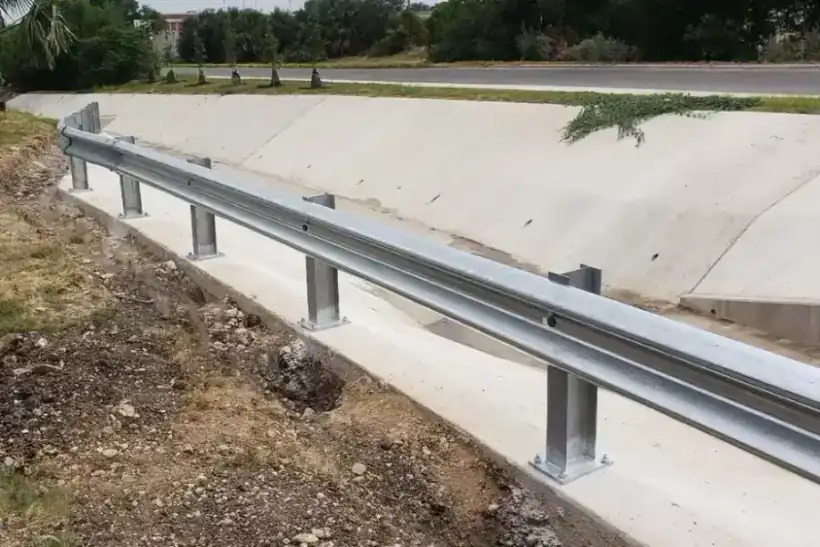
Aluminum, stainless or steel is a real decision, not a checkbox
Aluminum is the lightest of the three and does not rust, which suits a coastal or high-moisture site where corrosion is the main long-term threat. Stainless steel holds a finish and a look longer than the others under heavy handling, the reason it turns up most on public and commercial rail that gets touched constantly. Standard steel is the strongest option for the price and the usual choice on industrial rail rated for real impact, provided the coating is maintained. We walk through that tradeoff with every client rather than defaulting to one material across every job.
A guardrail run often shares a job site with a stair or handrail order, and any rail that needs a bracket or fitting nobody stocks becomes a custom fabrication piece rather than a compromise.